Why Personal Branding Matters, and Where Your Page Fits In
Skill gets you noticed once. A personal brand is what gets you chosen again, and it needs one consistent home online, not a website here, a booking tool there, and a bio link pointing at neither.
Two people can offer the same service, post the same kind of content, and charge the same price, and one of them gets chosen and the other doesn’t. The difference, almost always, is the thing that isn’t the work itself: whether the person behind it feels like someone you already trust before you’ve even spoken to them. That’s personal branding, and it’s not a luxury for people with large followings. It’s the actual mechanism by which someone picks you over the next equally capable option.
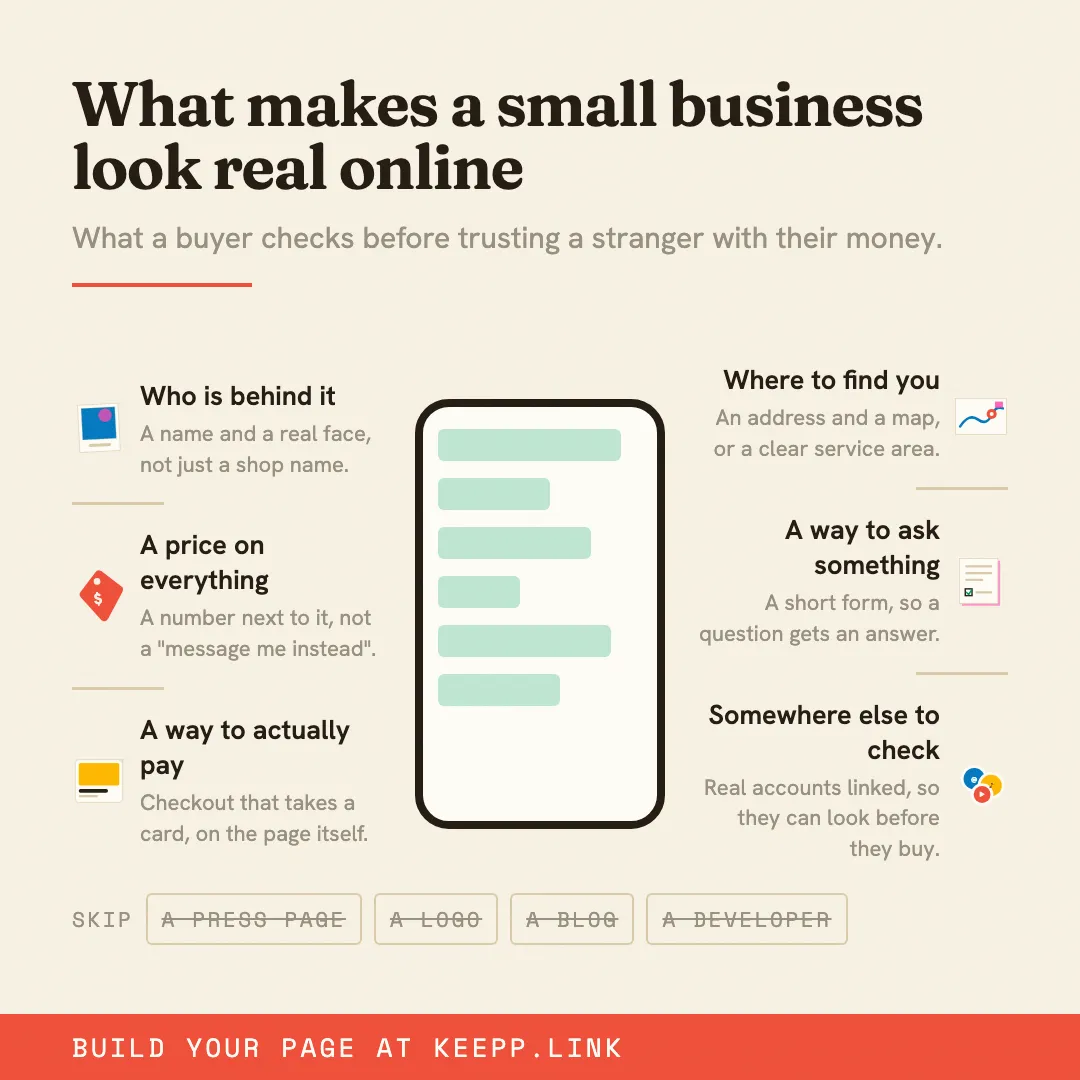
This post is about why that matters more than it used to, and what a personal brand actually needs from the page behind it.
You don’t own your reach, only your name
A post reaches ten thousand people this month and eight hundred the next, and nothing about your work changed, the algorithm did. Platforms change their rules, their ranking, and occasionally their entire existence, and none of that is something a creator, coach, or consultant controls. What survives every one of those changes is the thing that was never rented in the first place: your actual name, and the page that represents it.
A personal brand built entirely on top of a platform’s reach is a brand with no foundation under it. A personal brand with its own page (one you fully control, that doesn’t disappear if a platform changes its algorithm or its rules) has something to stand on regardless of what any single platform does next.
Recognition compounds when it has one place to land
Someone hears your name on a podcast. Someone sees your work in a friend’s story. Someone Googles you after a talk. Each of those moments is a chance for recognition to build, but only if they all lead somewhere consistent. If a podcast mention points to a website, the Instagram bio points to a different link, and the “DM me” from a story points to nothing trackable at all, every touchpoint starts from zero instead of adding to the last one.
One page, consistently linked everywhere you’re mentioned, is what turns a handful of scattered impressions into an actual, growing sense of “I’ve seen this person before, and they’re legit.” Every product is a shareable link covers the sharper version of this for anyone recommending specific things, but the underlying principle holds for the brand as a whole: one consistent destination is what makes repeated exposure add up.
A brand only pays off if people can act on it
Recognition is worth nothing if it dead-ends. Someone who likes your content, trusts your name, and wants to work with you needs an actual next step (book a call, buy the thing, join the list) sitting right there, not buried three DMs deep or scattered across a website, a separate booking tool, and a payment link that don’t know about each other.
A Keepp page puts all of that in one place. A booking block turns “I want to work with them” into an actual appointment on your real calendar. A product block turns “I want that” into a completed sale through your own connected Stripe account. A form block catches the person who isn’t ready yet, so interest doesn’t just evaporate the moment they close the tab.
Looking like a deliberate brand, not a template
Part of what makes a personal brand feel real is that it looks considered: your own fonts, your own colors, your own layout, not a template a thousand other people are using with a different photo swapped in. Styling your page and choosing a font pairing are what separate a page that feels like yours from one that feels like everyone else’s link-in-bio. A custom domain on top of that (your own name as the actual address, not a shared link shortener) is the difference between “a link I was given” and “a place I own.”
The page grows the same way the brand does
A personal brand rarely stays one thing. A creator becomes a coach. A coach starts selling a course alongside 1:1 work. A course creator adds a community, then starts speaking, then starts consulting for other businesses on the side. Each of those stages used to mean a new tool, a new link, sometimes a whole new site, because most platforms are built for one specific business model, not a person whose model keeps evolving.
A Keepp page grows by adding a block, not by migrating anywhere. A booking page for coaches and consultants sits next to selling online courses and community access sits next to sharing recommendations, affiliate links, and promo codes: the same URL you’ve been building recognition around the whole time, just doing more as you do more.
Knowing what’s actually working
A personal brand’s growth is easy to feel and hard to measure: more comments, more DMs, a vague sense that things are picking up. Real analytics turn that feeling into something you can act on: where visitors are actually coming from, what they click once they arrive, and where they drop off before converting. That’s the difference between guessing which platform is actually driving business and knowing it.
What this looks like in practice
Marcus Ellison, a life and business coach, runs his entire personal brand off one page. An “apply to work with me” form screens prospects before they book, so his time goes to people who are actually a fit, and a digital workbook sells alongside it for everyone who isn’t ready for 1:1 work yet. Every touchpoint, from a podcast mention to an Instagram bio, points at the same page, doing the same job of turning recognition into an actual next step.
Rue Nash, an independent musician, is a different shape of the same idea, and a simpler one. Her page runs entirely on the free plan: a profile, her socials, a showcase card for her latest release, and streaming links to Spotify, Apple Music, and Bandcamp. No booking, no product, nothing to sell yet, just one consistent page that every mention of her name can point to, ready to add a merch drop or a tour date the moment there’s one to add. Someone who discovers Rue through a playlist and someone who discovers her through a friend’s share both land on the same page, telling the same brand story. The rest of the case studies show the same principle across other kinds of personal brands: a photographer, a course creator, a strength coach.
Common questions
Do I need a big following before personal branding is worth investing in? No, the mechanism is the same at any size. A hundred people who trust you convert better than ten thousand who’ve never heard of you twice. The page is what turns that trust into something acted on, regardless of how many people currently see it.
Isn’t my Instagram profile already my personal brand? It’s part of it, but a social profile is built for scrolling, not converting. There’s no real checkout, no booking calendar, no way to capture someone who isn’t ready to act the second they see your post. The profile builds recognition; the page is where that recognition turns into an outcome.
What if my brand spans more than one thing: content, coaching, a product line? That’s normal, not a problem to solve with three different links. Choosing the right block covers how a single page holds a booking offering, a product, and a form side by side, each doing its own job under the same consistent brand.
Does this replace building an audience on social platforms? No, social is still how most people discover you. The page is what that discovery points to once someone’s curious enough to look closer, so the platform does the finding and the page does the converting.
Setting it up
- Claim your page at your actual name or the handle you’re building recognition around.
- Set up your profile with a real photo: people build trust with a face, not a logo.
- Style it with a font pairing that actually looks like you, not a default template.
- Add whatever turns interest into action for your specific brand: a booking offering, a product, or a form.
- Put the link in your bio, and everywhere else your name comes up.
Where to start
A personal brand is built one consistent impression at a time, and every impression needs somewhere real to land. Claim your page at keepp.link: free to start, and it grows the same way your brand does.
Claim your page at keepp.link: free forever, live in minutes.