Instagram Highlights Aren't a Storefront, Here's What Actually Converts
A lot of creators turn Story Highlights into a makeshift catalog, a cover for each product, tap through to a caption or a DM. Here's why that leaks sales, and what to use instead.
A common workaround on Instagram: turn Story Highlights into a makeshift catalog. One highlight cover per product, tap into it, and the Story behind it explains what it is and how to buy, usually “DM me” or a link back to an old caption. It’s a real attempt at solving a real problem, and it’s the shape of solution you get when the only tools available are Highlights and a single bio link.
It also leaks sales at almost every step, in ways that aren’t obvious until you compare it to an actual storefront.
Where the highlight-as-catalog approach breaks down
No price is visible until you tap in. A Highlight cover is an image and a label. Someone has to tap through, watch or read the Story, and often keep tapping to find the price: friction a real product card doesn’t have, where the price sits right next to the photo.
“DM me to order” is a queue, not a checkout. Every sale through Highlights usually routes through a direct message. You confirm availability, negotiate or confirm price, and collect payment info manually, one conversation at a time. That’s a real bottleneck the moment more than a couple of people are interested at once, and it’s the same manual coordination a DM-based ordering system runs into in general.
Nothing is searchable or comparable. A visitor browsing five product Highlights can’t see them side by side the way they could scanning a page. They’re watching one Story at a time, sequentially, with no way to compare price or details across products without replaying each one.
It doesn’t survive you forgetting to update it. A sold-out product’s Highlight cover often just… stays up, since nothing forces you to remove it. A visitor taps in expecting to buy something that’s been gone for weeks.
What a real product page does differently
A product block shows the photo, price, and description together, with a checkout that runs on the page itself, no DM required, no tap-through-a-Story sequence. Stock limits are enforced automatically: once something sells out, the page reflects that immediately, not whenever you remember to update a Highlight. Multiple products sit side by side, so a visitor compares them the way they would in an actual shop.
If part of what you offer isn’t a straightforward sale (a custom piece, a bulk order, something you’d rather negotiate) display pricing still shows the price and captures a real lead with contact details, without forcing a DM to be the only way in.
Highlights still have a job, just not this one
None of this means abandoning Highlights. They’re genuinely good for the content Instagram built them for: behind-the-scenes, FAQs, testimonials, a visual index of what you post about. The mistake is asking them to also be a checkout, a price list, and an inventory system, jobs a real product page does natively and a Highlight has to fake with Stories and DMs.
Where to start
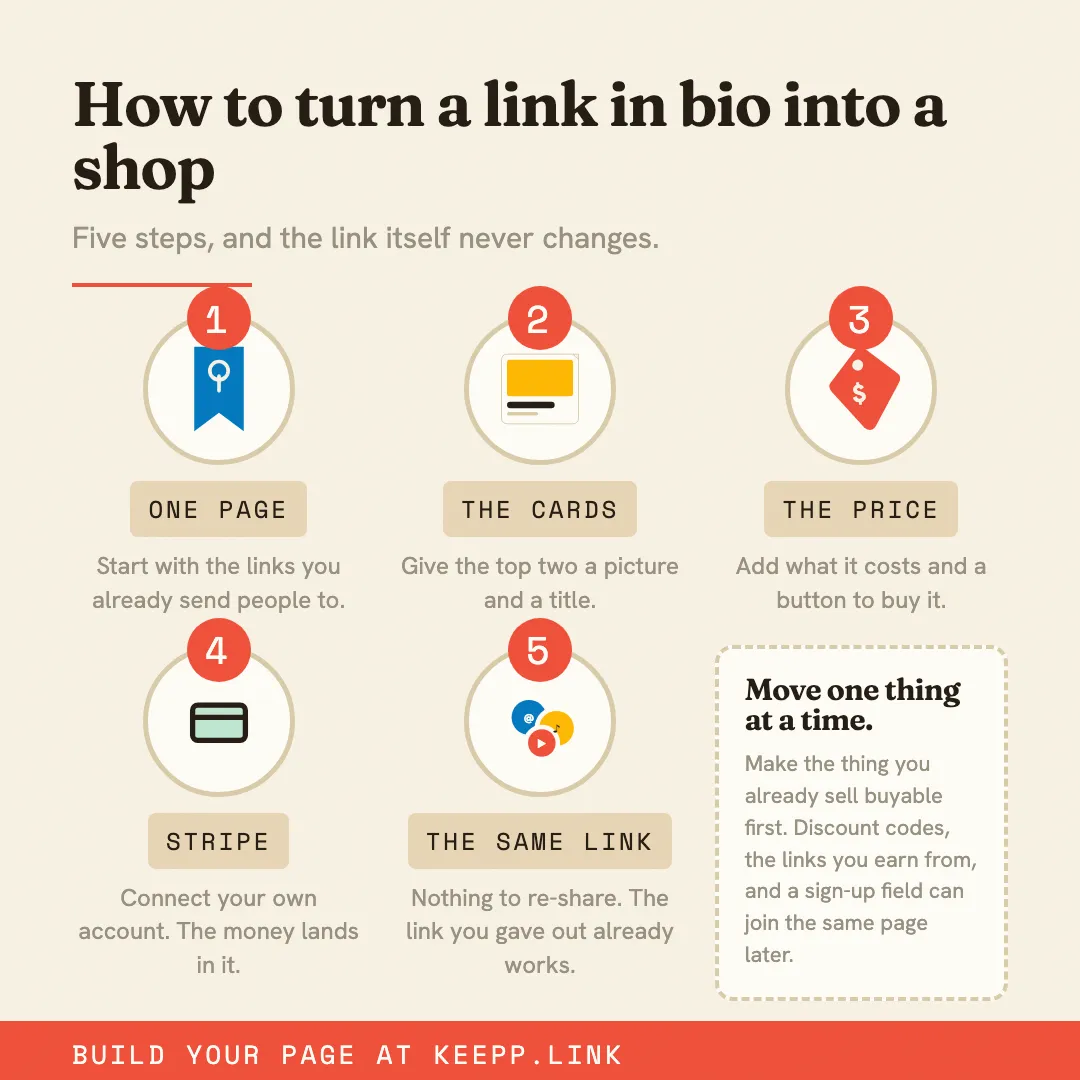
Move whatever you’re currently selling through Highlights-plus-DMs onto real product or booking blocks, and keep Highlights doing what they’re actually good at. Claim your page, add your first product, and style it to match your brand: free to start, no card required.
Build a real storefront at keepp.link: free to start, live in minutes.